Template
Backlink Analysis Template (Free, No Signup)
Backlink analysis has an unusual problem: the standard template for doing it is built around a task Google says most sites should never perform.
Start with whether links still matter at all. Ahrefs studied the top million highest-volume US keywords in January 2025, correlating link metrics against top-20 positions, and found referring domains correlating at 0.255 and Domain Rating at just 0.131 — down from 0.29 and higher in their 2019 comparison. For local queries the correlation was notably stronger at 0.33, which is the number that matters if you serve a town rather than the internet.
So: links still count, they count less than they did, they count more for local businesses, and the vendor metric everyone sells you — domain-level authority — correlates worst of the four. That's the honest starting position, and the rest of this template follows from it.
What's actually measurable
Before the template, four definitions — because half the confusion in this area is vocabulary.
Referring domains vs backlinks. A backlink is one link. A referring domain is one linking website. Two links from the same newspaper are two backlinks and one referring domain. Referring domains is the sturdier number, because total backlinks inflates the moment someone adds you to a sitewide footer.
The rel attributes, in Google's own words:
| Attribute | Google's stated purpose |
|---|---|
rel="sponsored" | "Mark links that are advertisements or paid placements (commonly called paid links)" |
rel="ugc" | "user-generated content (UGC) links, such as comments and forum posts" |
rel="nofollow" | "when other values don't apply, and you'd rather Google not associate your site with, or crawl the linked page from, your site" |
Note the hedge in how Google treats them: such links "will generally not be followed." These are hints, not directives.
Anchor text is the visible text of the link. Google's guidance is that good anchor text is "descriptive, reasonably concise, and relevant" — and there is no Google-published ideal ratio. Any template telling you to aim for "30% branded, 20% exact match" invented those numbers.
Link velocity — the rate at which you gain links — has no Google definition, threshold, or endorsement anywhere. Watch it as a diagnostic if you like, the way you'd watch any sudden change. Don't treat it as a metric with a safe range.
The template
BACKLINK ANALYSIS — [site]
Analyst: [name]        Date: [YYYY-MM-DD]
Data sources used: [GSC / Bing WMT / AWT / Moz]

═══ 1. THE BASELINE ═════════════════════════
[ ] Total referring domains                    [__]
[ ] Total backlinks                            [__]
    Ratio backlinks : domains                  [__:1]
    (A very high ratio = sitewide or footer links,
     not many independent endorsements)
[ ] New referring domains, last 90 days        [__]
[ ] Lost referring domains, last 90 days       [__]
    SOURCE + DATE PULLED:

═══ 2. WHO LINKS TO YOU ═════════════════════
    GSC > Links > Top linking sites
    NOTE: GSC does not flag nofollow. Tables cap
    at 1,000 rows; export goes to 100,000.
    Top 10 referring domains:
     1. [domain]              [links __]  [relevant? Y/N]
     2. [domain]              [links __]  [relevant? Y/N]
     3. [domain]              [links __]  [relevant? Y/N]
    [ ] Any you don't recognise                [__]
    [ ] Any you're embarrassed by              [__]
    FINDINGS:

═══ 3. WHAT THEY LINK TO ════════════════════
    GSC > Links > Top linked pages
    Top 5 linked pages:
     1. [url]                 [domains __]
     2. [url]                 [domains __]
    [ ] Do your money pages appear at all?     [Y/N]
    [ ] Is your best content getting the links? [Y/N]
    [ ] Any linked pages now 404 or redirected? [__]
        (These are recoverable link equity —
         restore or 301 them, highest-value fix here)
    FINDINGS:

═══ 4. ANCHOR TEXT ══════════════════════════
    GSC > Links > Top linking text
    Top anchors:
     1. [text]                [count __]
     2. [text]                [count __]
     3. [text]                [count __]
    [ ] Mostly your brand / URL / natural phrases? [Y/N]
    [ ] Any commercial exact-match you did NOT
        ask for and cannot explain?               [__]
    NOTE: there is no Google-published target ratio.
    You are looking for something inexplicable,
    not a percentage.
    FINDINGS:

═══ 5. SANITY CHECKS ════════════════════════
[ ] Sudden unexplained spike in new domains?   [Y/N]
[ ] Links from sites in unrelated languages
    or industries at scale?                    [Y/N]
[ ] Have you EVER bought links or used a
    link-building service of unknown method?   [Y/N]
[ ] Any manual action in GSC > Security &
    Manual Actions?                            [Y/N]
    ↑ THIS is the question that decides whether
      disavow is even on the table.
    FINDINGS:

═══ 6. OPPORTUNITIES ════════════════════════
[ ] Unlinked brand mentions found              [__]
[ ] Suppliers / partners with a partner page   [__]
[ ] Local directories, chamber, trade bodies   [__]
[ ] "Best [your service] in [your town]" lists [__]
[ ] Customers or clients who'd link to you     [__]
    NEXT ACTIONS:

═══ 7. DECISION ═════════════════════════════
    Manual action present?          [Y/N]
    Large volume of links you or a
    contractor deliberately built?  [Y/N]

    If BOTH are No  -> do nothing. Do not disavow.
    If BOTH are Yes -> attempt removal first,
                       then disavow, then reconsider.
    DECISION:
Running it with free tools
You do not need a paid subscription for this. The four free sources, and what each honestly gives you:
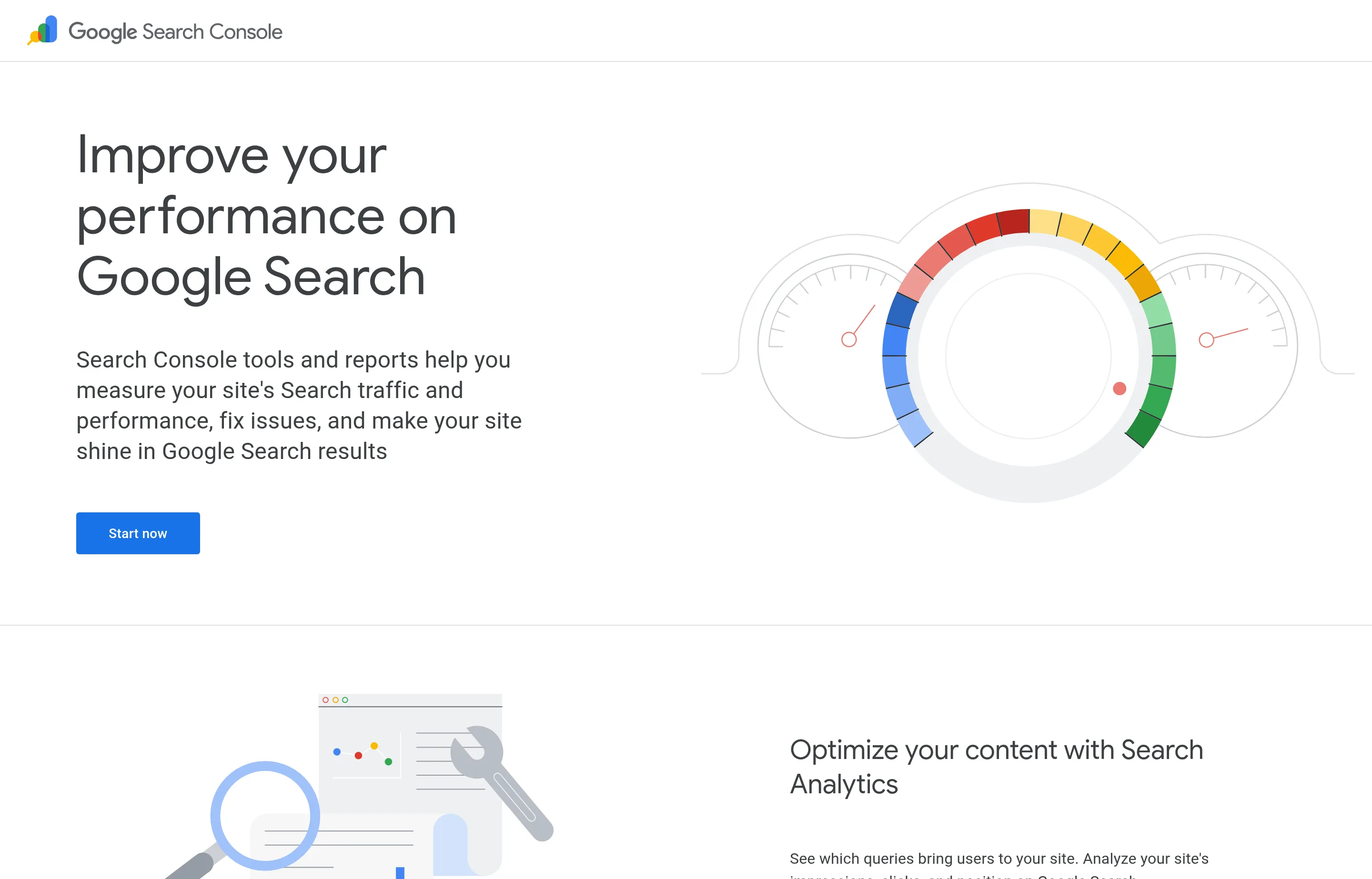
Google Search Console → Links. Google's own view of your backlinks, split into top linked pages, top linking sites, and top linking text. Tables cap at 1,000 rows; exports go to 100,000. Two limits to know: it's explicitly a *sample*, and it does not tell you whether a link is nofollow. It also includes links that may since have been removed.
Bing Webmaster Tools. Free, and includes a backlinks report with referring pages, referring domains, and anchor text. A second engine's view costs nothing and takes ten minutes to set up.
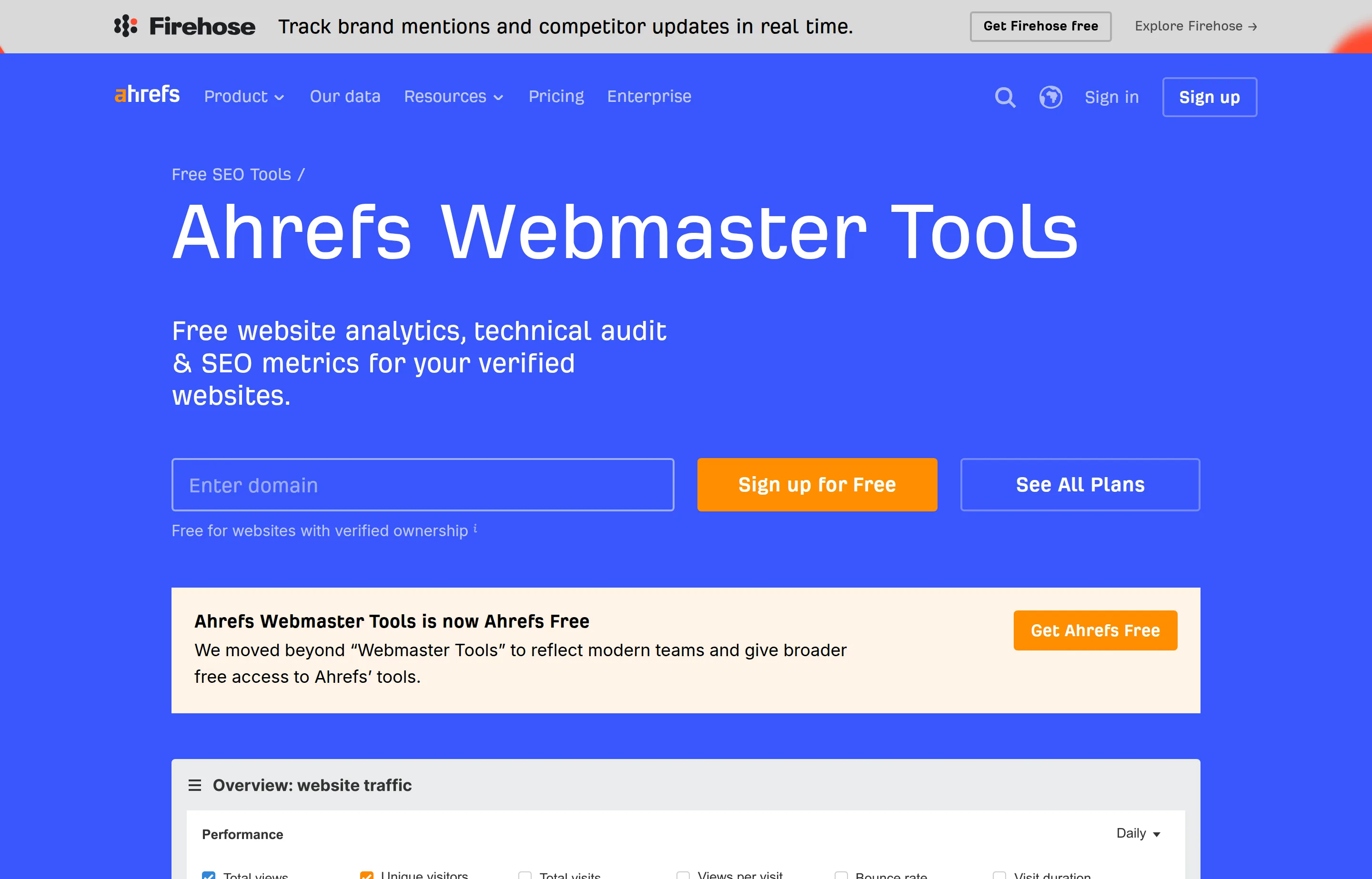
Ahrefs Webmaster Tools. Free for site owners who verify ownership. Shows 1,000 backlinks at a time and includes Site Audit with 5,000 crawl credits a month. The catch is that it only works on sites you own — competitor analysis needs a paid plan, from $129/mo.
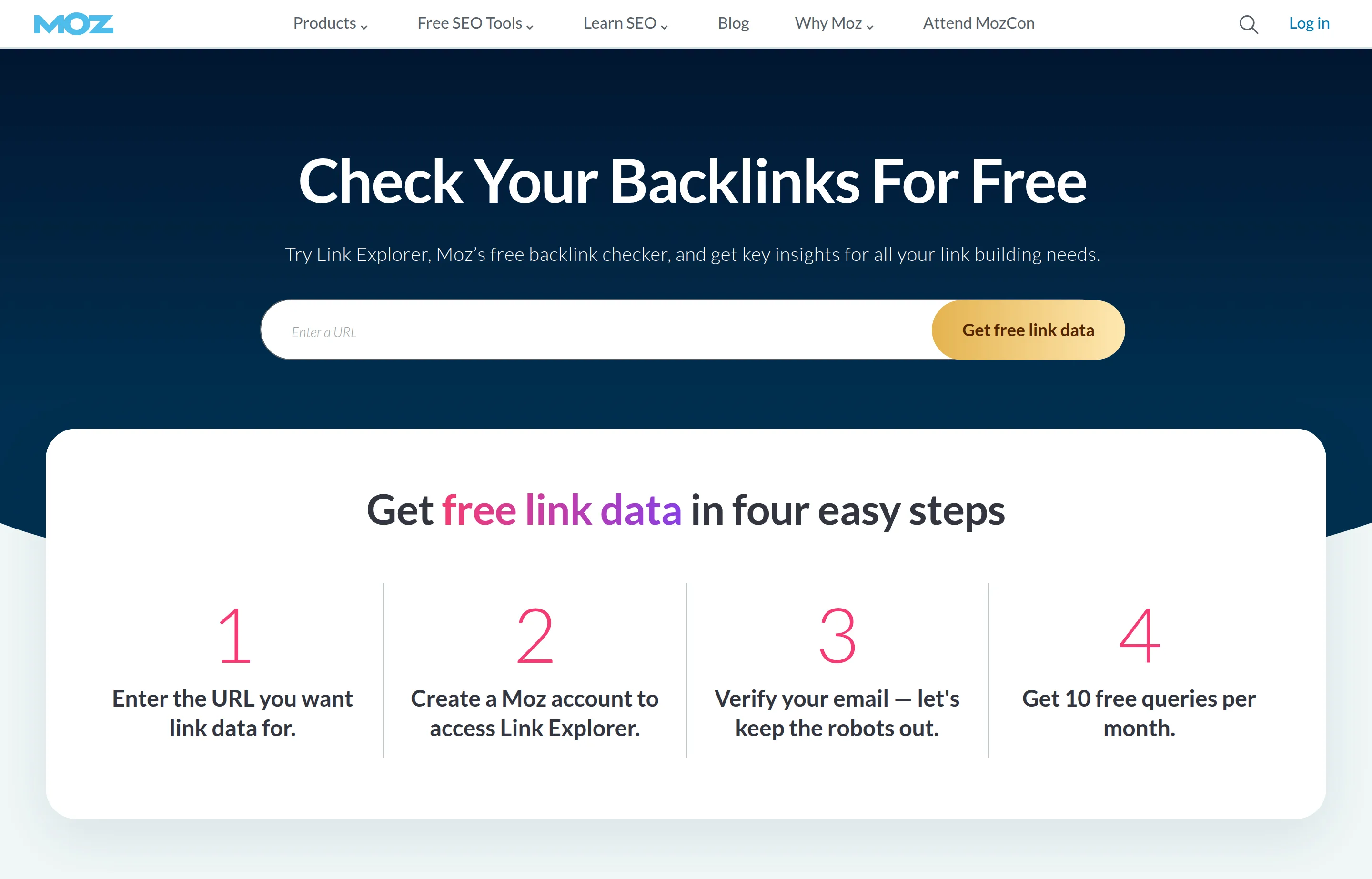
Moz Link Explorer. Ten free queries a month with a free account, including anchor text analysis, linking domain counts, follow vs nofollow breakdown, and recently gained or lost domains.
That combination covers everything in the template. Between them you'll see more than you'll act on.
Ratings below are from GetApp, read on 2 August 2026 — G2, Capterra, and Trustpilot block automated reads, so nothing here comes from them.
If you outgrow the free tiers
Two paid options worth knowing, though a small business rarely needs either:
Majestic — built specifically for link analysis, with its own Trust Flow and Citation Flow metrics. Lite $49.99/mo, Pro $99.99/mo, API $399.99/mo. No free tier, though it offers free public tools separately. 4.4/5 from 30 reviews on GetApp.
SE Ranking — a broader SEO suite that includes backlink monitoring. Core $129/mo list or $103.20/mo annual; Growth $279/mo or $223.20 annual. 14-day trial, no card, but no permanent free tier. 4.7/5 from 297 reviews on GetApp.
Remember what these buy you: scale and competitor data, not different answers. Prices read 1–2 August 2026; verify before relying on them.
The toxic link industry
This is the part worth reading twice, because an entire product category rests on it.
Google's position on disavowing. The documentation opens with *"Step 0: Decide if this is necessary"* and says:
It also warns that disavow "is an advanced feature and should only be used with caution. If used incorrectly, this feature can potentially harm your site's performance in Google Search results," and adds: *"Google works very hard to make sure that actions on third-party sites do not negatively affect a website."*
Google gives two conditions, joined by AND, not OR: you must have a considerable number of spammy artificial links pointing at your site, and those links must have caused a manual action or be likely to. Both. One without the other isn't a reason.
A detail almost no template mentions: the disavow tool does not support Domain properties in Search Console. Google states it directly. Since Domain properties are now the default setup for many small businesses, a large share of the people being sold disavow services can't use the tool as configured anyway.
Ahrefs, asked whether they have a spam score:
And on toxic backlinks, quoting Google's John Mueller, Ahrefs states that there's no such thing as toxic backlinks — that the term was *"made up by certain SEO tools to describe backlinks they think could hurt your website's rankings."* They add that Google's guidelines "do not specify any specific metric or score that would determine if a backlink is considered manipulative or spammy."
Semrush does ship a Toxicity Score, with published bands: high above 10% toxic backlinks, medium at 3–9%, low below 3%. Moz ships a Spam Score. Both are proprietary. Neither is a Google measurement.
And Bing deleted the feature entirely. In September 2023 Microsoft announced it would remove the disavow tool and its API that October, because its systems can *"differentiate between natural and unnatural links, and… ignore or discount the latter without affecting the former."*
Put those together: one search engine says most sites should never use disavow, another removed it outright, one major vendor refuses to build a toxicity score and calls the concept invented, and two others ship different proprietary scores that disagree with each other. That is not what a real, measurable quantity looks like.
So when should you disavow?
Rarely, and the template's section 7 is the whole decision. In practice:
- You have a manual action in Search Console for unnatural links. Then yes — and Google's advice is to try to get the links removed first.
- You (or an agency you hired) actively built manipulative links and you're cleaning up your own mess. Then possibly.
- Anything else — a competitor's spam, weird foreign directories, a scraper wave, a low "toxicity" score in a tool. No. That is the ordinary background noise of having a website, and Google's systems are built to ignore it.
If a service pitches you on a toxic link audit and a routine disavow file, they are selling a fix for a problem you almost certainly don't have, using an action Google warns can hurt you.
What links actually do for a small business
Skip the cleanup theatre and the answer becomes simple: earn a small number of real links from places that make sense.
For a local business, the 0.33 correlation on local queries makes this more worthwhile than the general figures suggest. And the sources that work are unglamorous:
- Suppliers and manufacturers. Many keep a stockist, installer, or partner page. Ask.
- Trade bodies and certifications. If you're accredited, the accreditor probably has a member directory.
- Chamber of commerce and local business associations.
- Local press and community sites. A sponsorship, a genuine local story, an event you host.
- "Best X in [town]" roundups. These matter twice now — they're links, and they're among the strongest signals for whether AI assistants recommend you, as covered in our AI search guide.
- Unlinked mentions. Someone already wrote your name without linking it. That's the shortest email you'll ever send.
Two things to avoid, both named directly in Google's link spam policies: exchanging money, goods, or services for links that pass ranking credit, and "excessive link exchanges" or partner pages that exist only for cross-linking. Paying for advertising is fine — the links just need rel="sponsored" or rel="nofollow".
And note the finding that reframes the effort: Ahrefs' analysis of 75,000 brands found branded web mentions correlated far more strongly with AI visibility (0.66–0.71) than backlinks did (0.218). Increasingly, being talked about matters more than being linked to. The work is similar; the bar is lower.
FAQs
How many backlinks does a small business need?+
There's no threshold. Referring domains correlate with rankings at around 0.255 across a million SERPs — a real but modest relationship, meaning plenty of pages rank with few links and plenty with many links don't rank. Ten genuine local and industry links will do more for a plumber than a thousand directory submissions.
Should I disavow toxic backlinks?+
Almost certainly not. Google says most sites will never need the tool and that misusing it can hurt you, the tool doesn't work with Domain properties, Bing deleted its version in 2023, and Ahrefs — a major backlink vendor — refuses to publish a toxicity score and calls the concept made up. Unless you have a manual action, do nothing.
What's a good Domain Authority to aim for?+
None, because it isn't a Google metric. Moz, which created DA, states on its own site that it "is not used by Google to determine search engine rankings." Ahrefs' DR correlated at 0.131 with rankings — the weakest of the four link metrics they tested. Track it as a rough trend if you find it motivating; don't set goals against it.
Do nofollow links have any value?+
Google treats `nofollow` as a hint, saying such links "will generally not be followed." But the value isn't only in ranking signal: a nofollow link from a local newspaper still sends real visitors, still builds a brand mention, and still tells an AI system your business exists. Given how strongly branded mentions correlate with AI visibility, dismissing nofollow links is out of date.
How do I find out who links to my competitors?+
Not free, unfortunately. Ahrefs Webmaster Tools only works on sites you've verified. Moz Link Explorer's ten free monthly queries can be spent on competitor domains, which is the cheapest legitimate option. Beyond that you're into paid plans starting around $99–$129/mo.
My backlinks dropped suddenly. Is that a problem?+
Usually not. Lost links are normal — sites redesign, articles get archived, directories close. Check whether the lost links pointed at pages that now 404 or redirect, since restoring those is a genuine recoverable win. A drop in the reported count can also just be your tool re-crawling and updating its index.
What to do next
Copy the template and fill in sections 1 through 4 from Search Console — that's fifteen minutes and it's Google's own data, which is the only view that isn't a vendor's estimate.
Then do the two things that actually pay:
- Fix section 3's broken linked pages. Any URL that earned links and now 404s is recoverable value sitting in a report. Restore it or redirect it.
- Work section 6. Suppliers, trade bodies, local directories, unlinked mentions. Five real emails beat any amount of analysis.
And unless section 5 turned up a manual action, skip the disavow file entirely. The most defensible backlink strategy for a small business is to earn a few good links and otherwise leave the profile alone.
For the rest of your site's health, the SEO audit template covers indexation, on-page, speed, and structured data — with the same rule that every check cites the documentation it came from.
Free tools to try
Keep reading
Guide
Small Business SEO Audit Template (Free, Copy-Paste)
A free SEO audit template where every check cites Google's own documentation — no signup, no download, and honest limits on every free tool it uses.
Guide
Local SEO for Small Business: Guide + Best Tools
How Google ranks local businesses, the Business Profile rules that get you suspended, and which local SEO tools are worth paying for in 2026.
Guide
Best AI SEO Tools for Small Businesses in 2026
The SEO tools that give small businesses a real edge in AI search — paid data suites, AI audits like CrawlRaven, PikaSEO's free suite, and the free essentials.