Guide
Best Free Email Marketing Tools for Small Business (2026)
Email is still the channel a small business owns outright — no algorithm decides who sees your message, and long-running industry research from Litmus (survey data collected in 2020) put average email ROI around $36 for every $1 spent, higher than any other channel. That's why "best free email marketing tools" is such a loaded search in 2026: the free tier is where most owner-operators start, and this year the free tiers changed dramatically. Mailchimp cut its free plan to 250 contacts in February. MailerLite cut its own to 250 subscribers in June. AWeber's free plan is gone entirely. Most of the roundups you'll find still quote the old numbers.
This guide ranks thirteen options by what you actually get free as of July 2026 — subscriber caps, send limits, whether automation works without paying, and where each vendor's branding sits on your emails — with every limit checked against the vendor's own pricing or help pages. One position up front: free tiers are on-ramps, not homes. The moment email makes you money, the edge is paying the $7–$33 that removes the caps, the vendor's logo, and the automation locks — so alongside each free tier we tell you exactly which paid tier is worth graduating into. There's no Small Business Tools product in this list; our stake is simpler: whichever platform you pick, our free Email Subject Line Generator and AI Email Writer work alongside it, and how to write email subject lines shows how to use them well.
The 2026 free-plan shakeup
If you last compared these tools even a year ago, three things changed:
- Mailchimp reduced its free plan to 250 contacts and 500 sends/month effective February 17, 2026 (it was 500/1,000 before, and 2,000 contacts in its famous heyday).
- MailerLite cut its free plan on June 16, 2026 from 500 subscribers and 12,000 emails to 250 subscribers and 2,500 emails/month, with feature caps enforced from August 13, 2026 — per MailerLite's own FAQ.
- AWeber no longer offers a permanent free plan at all — only a trial that converts to a paid subscription automatically.
The practical effect: the "default" free picks of the last decade are no longer the generous ones. The generous ones are now Kit, Sender, Brevo, and EmailOctopus. It's also the strongest argument for treating free as the trial, not the plan: vendors claw back free value whenever costs bite, but a paid tier keeps its terms — and at $7–$13 a month, the paid tiers here cost less than a single lost customer.
Quick comparison
| Tool | Free contacts | Free sends/mo | Automation on free | Paid from |
|---|---|---|---|---|
| PosterMyWall | Unlimited (design only) | 0, HTML export only | No | $13/mo |
| Kit | 10,000 | Unlimited | 1 automation + 1 sequence | $33/mo (annual) |
| Sender | 2,500 | 15,000 | Yes, full | $7/mo |
| Brevo | ~100,000 stored | 300/day (~9,000) | Yes (2,000-contact cap) | $9/mo |
| EmailOctopus | 2,500 | 10,000 | Basic (5-step) | $9/mo (annual) |
| beehiiv | 2,500 | Unlimited | No | $43/mo (annual) |
| MailerLite | 250 | 2,500 | Yes, 3 active | $12/mo |
| Zoho Campaigns | 2,000 | 6,000 | No | ~$3.50/mo (annual) |
| Loops | 1,000 | 4,000 | Yes, all features | Scales by contacts |
| Omnisend | 250 | 500 | Yes, full | $16/mo |
| Substack | Unlimited | Unlimited | None by design | 10% of paid subs |
| Mailchimp | 250 | 500 | No | $13/mo |
| AWeber | No free plan | — | — | $12.49/mo (annual) |
How we ranked these
"Free" only matters if the free tier does a real job. We weighed five things:
- Genuinely useful free limits — how big a list, and how many sends, before you hit a wall.
- Automation on free — a welcome email shouldn't require a credit card.
- Ease for a non-marketer — an owner-operator sets this up between customers, not in a marketing department.
- Branding and trust — whose logo rides on your emails, and what removal costs.
- Upgrade shock — what the first paid month actually costs when you outgrow free.
Every limit and price was read from the vendor's own pricing or help pages in July 2026 (the two exceptions are flagged in their entries). Ratings are real, linked, and dated — never invented — and where a reliable third-party rating doesn't exist, we say so instead of making one up.
The best free email marketing tools
1. PosterMyWall — free design with no subscriber limit at all
PosterMyWall gives you a fully loaded email design studio for free: no subscriber cap, no template limit, just open a layout and start building. The one thing it won't do on the free plan is send the email for you — you download the finished HTML and paste it into Gmail, Outlook, or whatever you're already using. Once you want PosterMyWall to handle delivery too, Premium unlocks that starting at $13 a month.
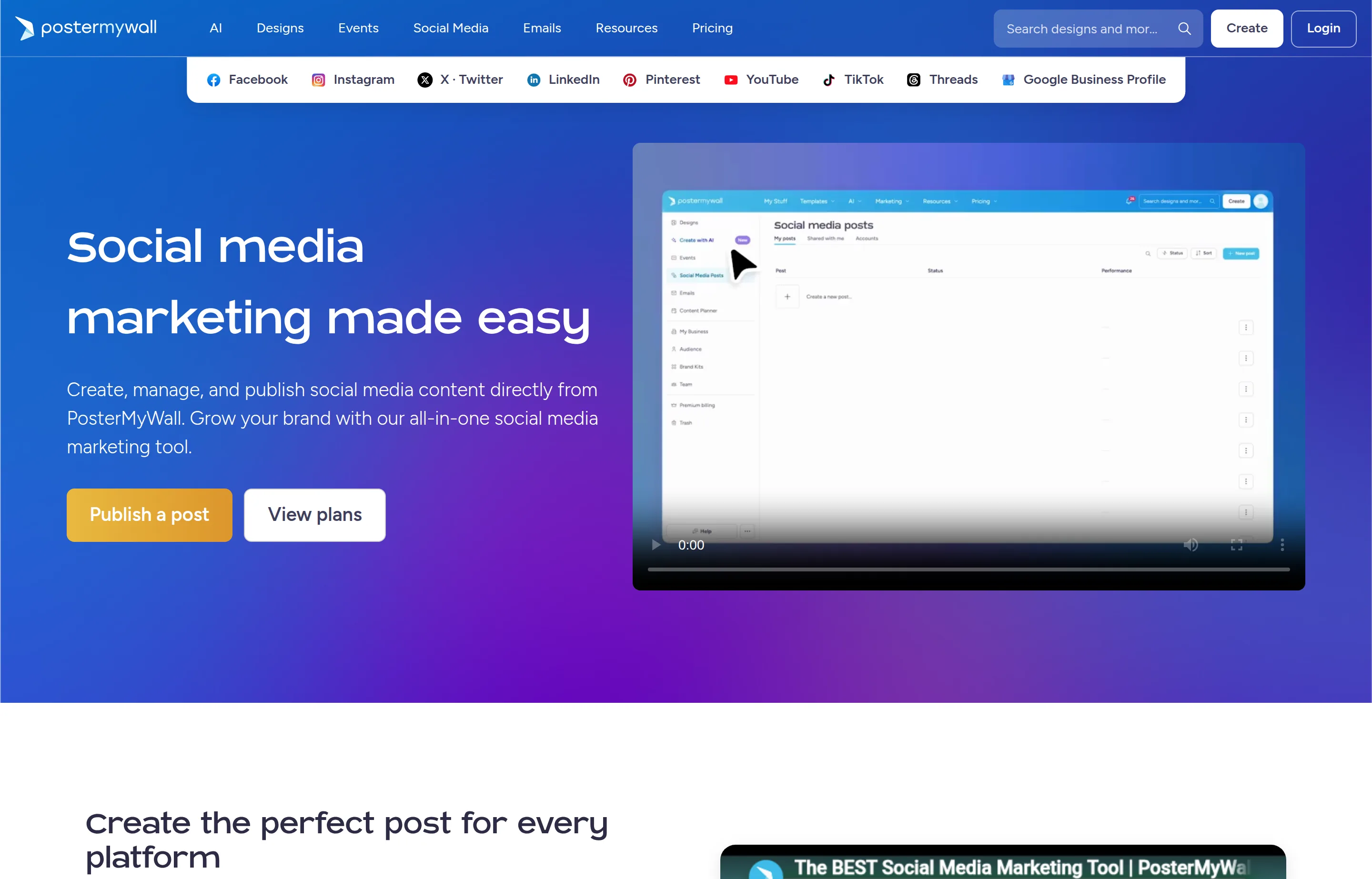
- Key features: 3,000+ free, customizable email templates; drag-and-drop editor with AI-assisted copywriting; HTML export to send through any email provider; Brand Kits to keep every campaign on-brand.
- Pricing: free for design and HTML export, no subscriber or campaign cap. Premium $13/month unlocks direct sending, up to 3,000 emails a month, with 3 connected social accounts. Premium Plus $30/month raises that to 10,000 emails a month, unlimited connected accounts, more AI credits, and unlimited Brand Kits.
- Pros: genuinely no subscriber ceiling on free since it's not counting sends; the template and AI design toolkit goes well beyond what most email tools offer for free; upgrading gets you direct sending without switching platforms.
- Cons: you can't actually send a campaign from PosterMyWall until you pay; no built-in list management, tagging, or automation the way dedicated email tools have; direct-send limits are lower than some competitors' paid tiers at the same price.
- Reviews: 4.8/5 on G2 (~70 reviews) and 4.8/5 on Capterra (~183 reviews) — as of July 2026.
2. Kit — the biggest genuinely free plan
Kit (formerly ConvertKit, rebranded in 2024) now has the most generous free plan in email marketing, full stop. The free Newsletter plan covers up to 10,000 subscribers with unlimited sends — Kit's own help center puts it plainly: "Manage up to 10,000 subscribers for free." That's forty times Mailchimp's current free cap.
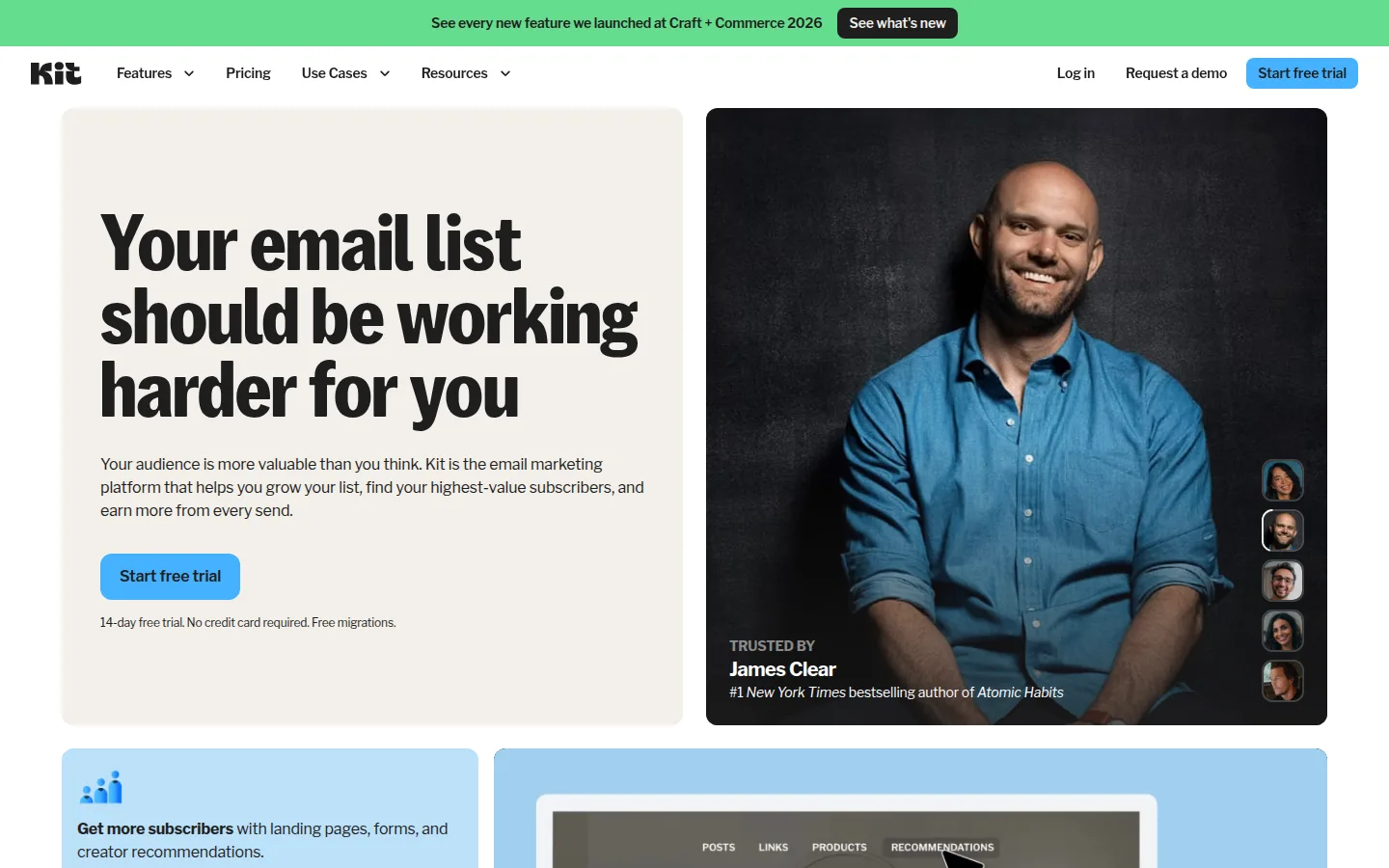
- Key features: unlimited broadcasts, unlimited landing pages and forms, tagging and segmentation, digital product sales on free, one basic visual automation plus one email sequence.
- Pricing: free to 10,000 subscribers. Creator starts at $33/month billed annually ($390/year) at 1,000 subscribers — more on monthly billing — and unlocks unlimited automations and branding removal.
- Pros: the free cap is in a different league; you can sell digital products without paying; landing pages and forms are unlimited even on free.
- Cons: one automation and one sequence on free is tight; Kit branding rides on free-plan emails; paid plans are pricier than Sender or Brevo once you do upgrade.
- Reviews: 4.4/5 on G2 (215+ reviews) — as of July 2026.
3. Sender — the most complete free toolkit
Sender gives a small list the whole feature set free: 2,500 subscribers, 15,000 emails a month, and full drag-and-drop automation — abandoned cart, welcome series, drip campaigns — plus landing pages, popups, and transactional email. Automation on free is the differentiator: Mailchimp and beehiiv lock it away entirely.
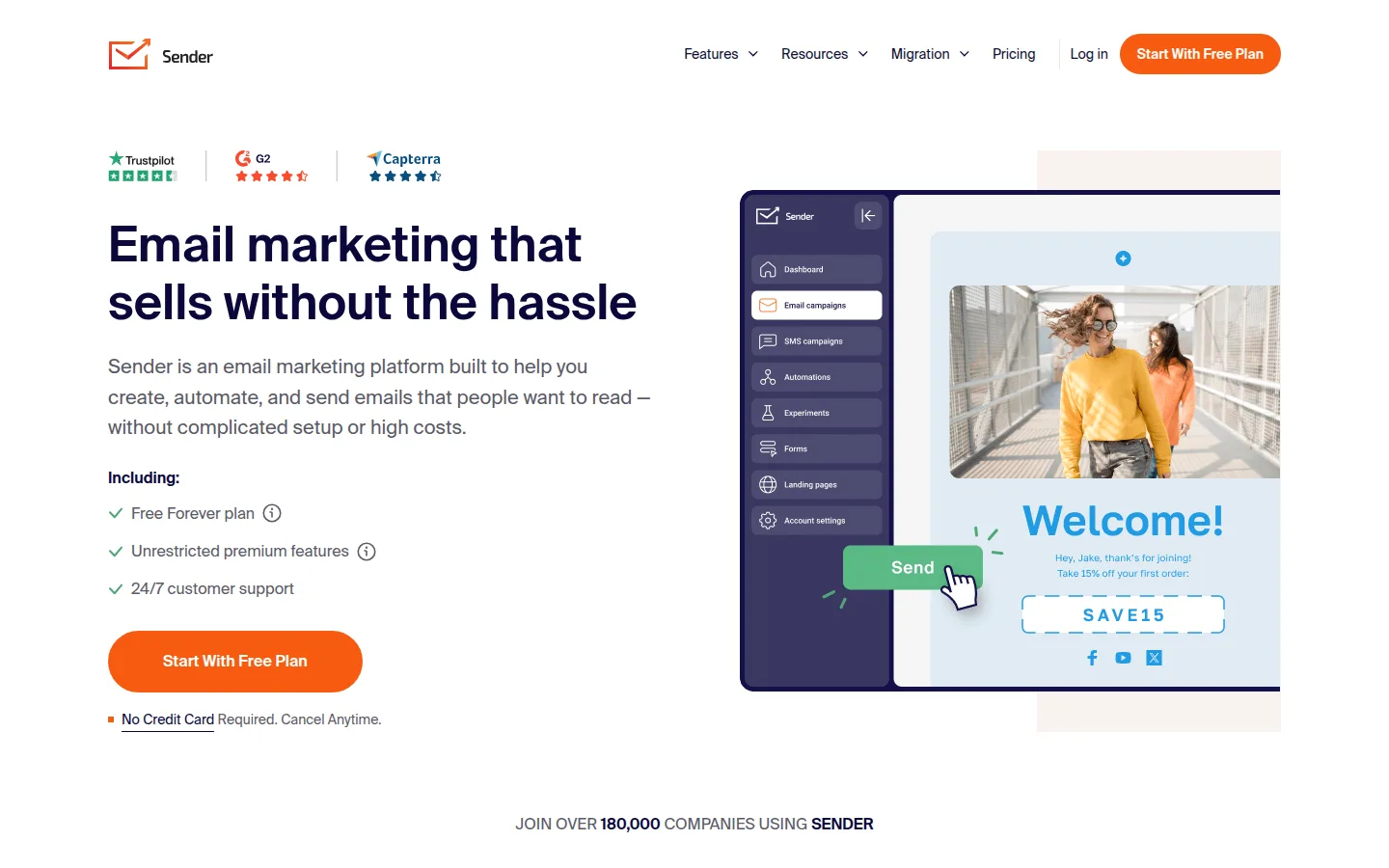
- Key features: visual automation workflows, segmentation, landing pages and popups on free, ecommerce integrations (Shopify, WooCommerce, Magento), SMS on paid plans.
- Pricing: free plan as above, with Sender branding. Standard starts at $7/month — the cheapest meaningful upgrade in this roundup — and scales with list size; it removes branding and adds SMS and A/B testing.
- Pros: the strongest free feature-per-subscriber deal here; cheapest paid exit ramp; highest G2 rating in this roundup.
- Cons: Sender branding on free emails; fewer templates and design options than the big names; smaller brand with a smaller review base.
- Reviews: 4.7/5 on G2 (245+ reviews) — as of July 2026.
4. Brevo — best for big lists that send occasionally
Brevo (formerly Sendinblue) inverts the usual model: it charges by email volume, not list size, so the free plan stores up to 100,000 contacts but caps sending at 300 emails/day (roughly 9,000/month). Real automation works on free for up to 2,000 contacts, and transactional email is included.
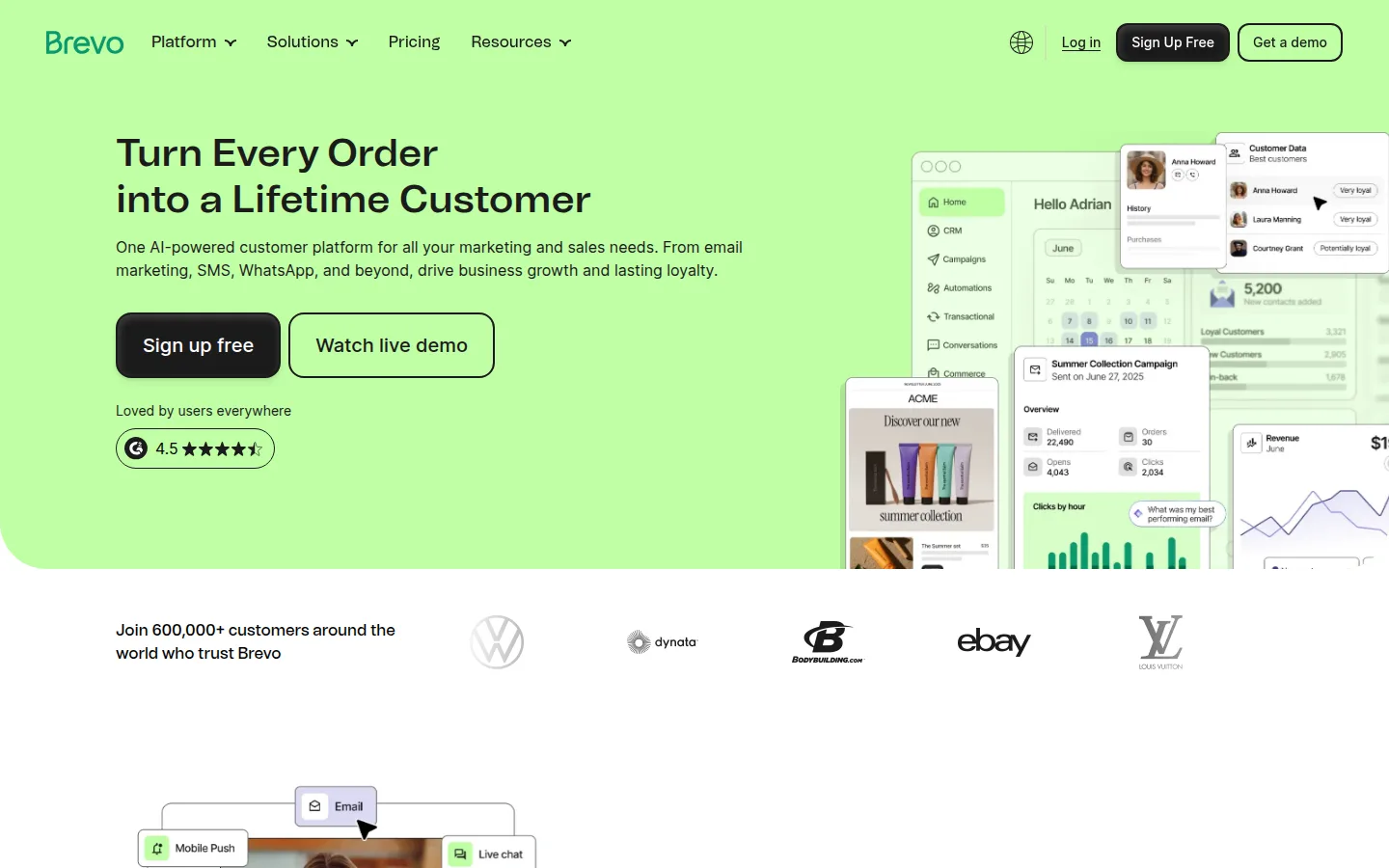
- Key features: email, SMS, WhatsApp, and web push in one; automation builder; built-in CRM free; transactional email/SMTP; ecommerce integrations.
- Pricing: free plan as above. Starter begins around $9/month for 5,000 emails and scales with volume; Brevo's branding removal is a paid add-on on top of that, and the 2,000-contact automation cap lifts on the higher Standard/Business tier (from about $18/month). Brevo renders exact prices in its page's calculator, so confirm at checkout.
- Pros: no practical contact limit free — ideal if you have a big list and email it occasionally; automation plus transactional email on free is a rare combo; includes a usable CRM.
- Cons: the 300/day throttle makes a single big campaign a multi-day affair on free; branding removal costs extra even on paid Starter; automation stays capped until the mid tier.
- Reviews: 4.5/5 on G2 (2,500+ reviews) · 4.4/5 average on Capterra — as of July 2026.
5. EmailOctopus — the simplest honest deal
EmailOctopus keeps it plain: 2,500 subscribers and 10,000 emails a month free, with basic welcome and drip automations (up to five steps each), one landing page, and one form. Reports on the free plan expire after 30 days.
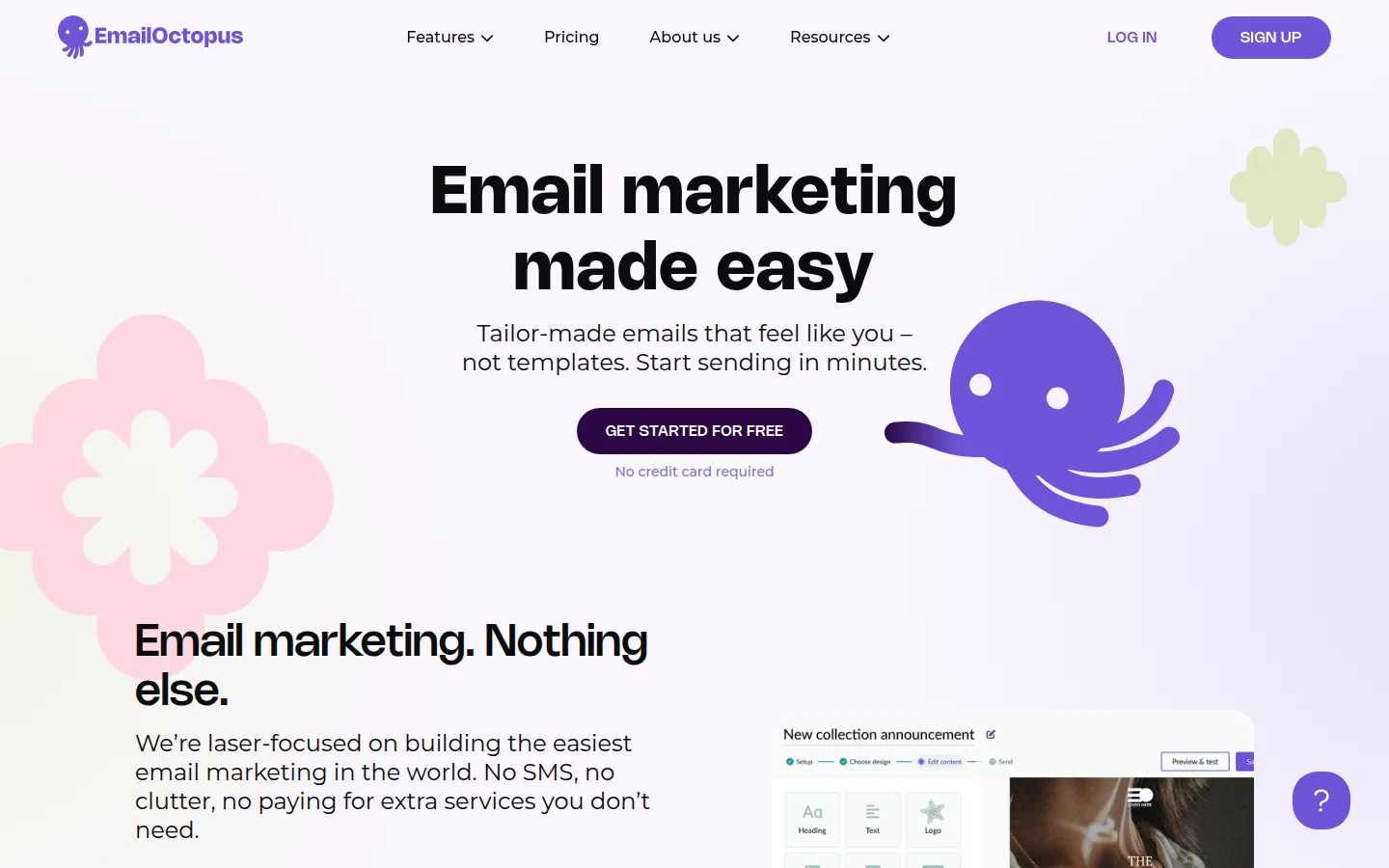
- Key features: clean campaign editor, basic automation sequences, tag-based segmentation, popup forms, 1,000+ integrations via Zapier.
- Pricing: free plan as above with EmailOctopus branding. Pro from $9/month billed yearly removes branding and unlocks unlimited landing pages, forms, users, and permanent reports.
- Pros: generous, no-tricks free tier; one of the best-rated tools here on Capterra; the cheapest "grown-up" paid plan alongside Brevo.
- Cons: automation is basic (welcome/drip only); one landing page and one form on free; 30-day report history on free.
- Reviews: 4.8/5 on Capterra (640+ reviews) · 4.2/5 on G2 — as of July 2026.
6. beehiiv — best free plan for a newsletter business
beehiiv is built newsletter-first. The free Launch plan covers 2,500 subscribers with unlimited sends, and — unusually — includes a custom domain, a full hosted website, and campaign analytics. What it doesn't include is automation of any kind: even a welcome sequence needs the paid Scale plan.
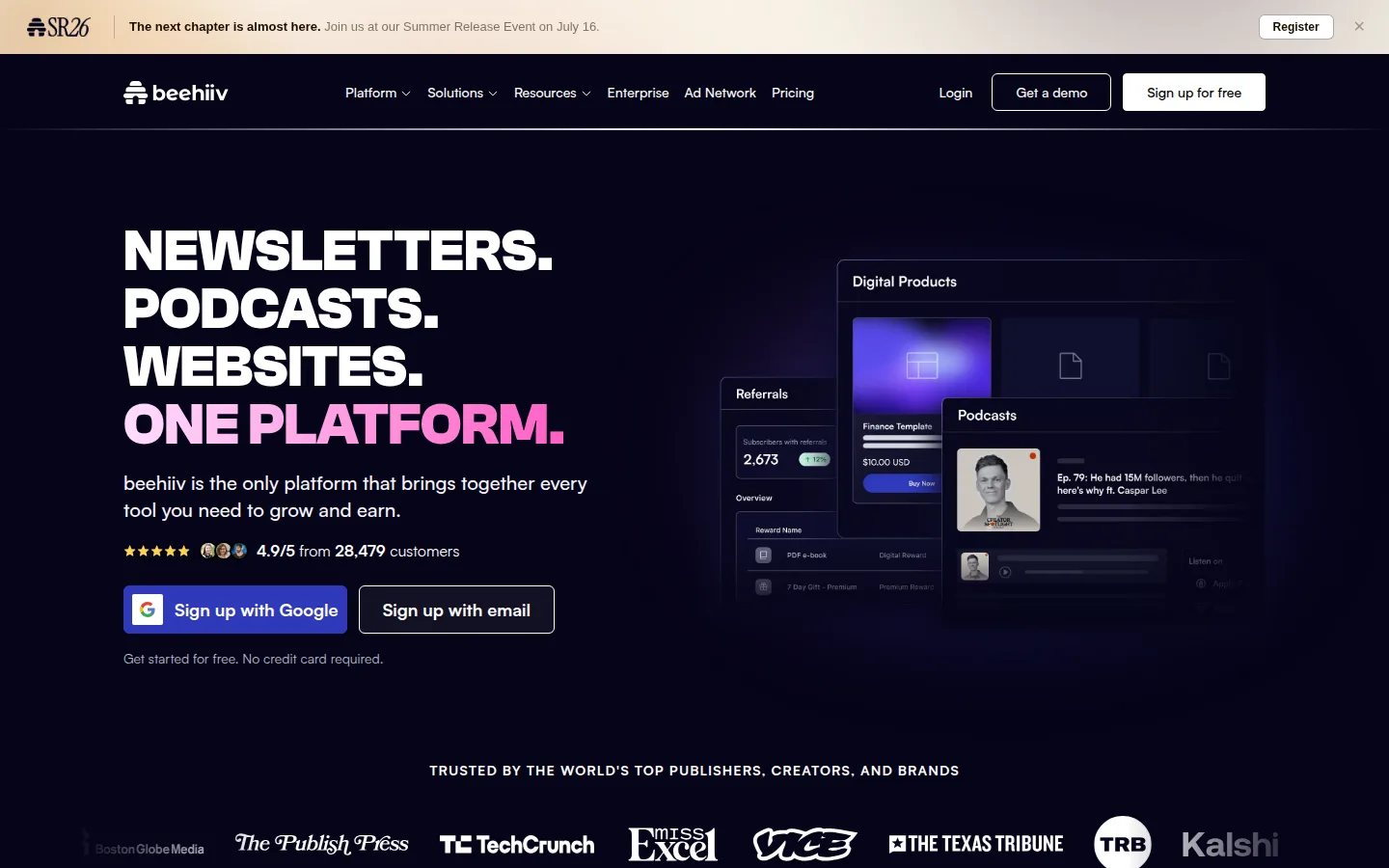
- Key features: newsletter plus website and archive, referral program, Boosts cross-promotion network, ad network and paid subscriptions on paid tiers, polls and segmentation.
- Pricing: free plan as above. Scale is $43/month billed annually ($49 monthly) at the entry tier and adds automations, the ad network, and 0% take rate on paid subscriptions; branding removal waits for the Max tier ($96/month annual).
- Pros: the best free package for a pure newsletter operation this side of Substack — with far more growth tooling; unlimited sends; custom domain on free.
- Cons: zero automation on free; branding removal is expensive; it's a newsletter platform, not a campaign/ecommerce tool.
- Reviews: 4.5/5 on G2 (40 reviews — a small base) — as of July 2026.
7. MailerLite — still the easiest, but newly cut
MailerLite has long been the "just works" pick, and its editor and onboarding remain best-in-class. But the June 16, 2026 free-plan cut is material: 250 subscribers and 2,500 emails a month, with 3 active automations, 3 forms, 1 landing page, and 1 website — and per MailerLite's FAQ, over-limit free accounts enter a restricted state once enforcement begins August 13, 2026.
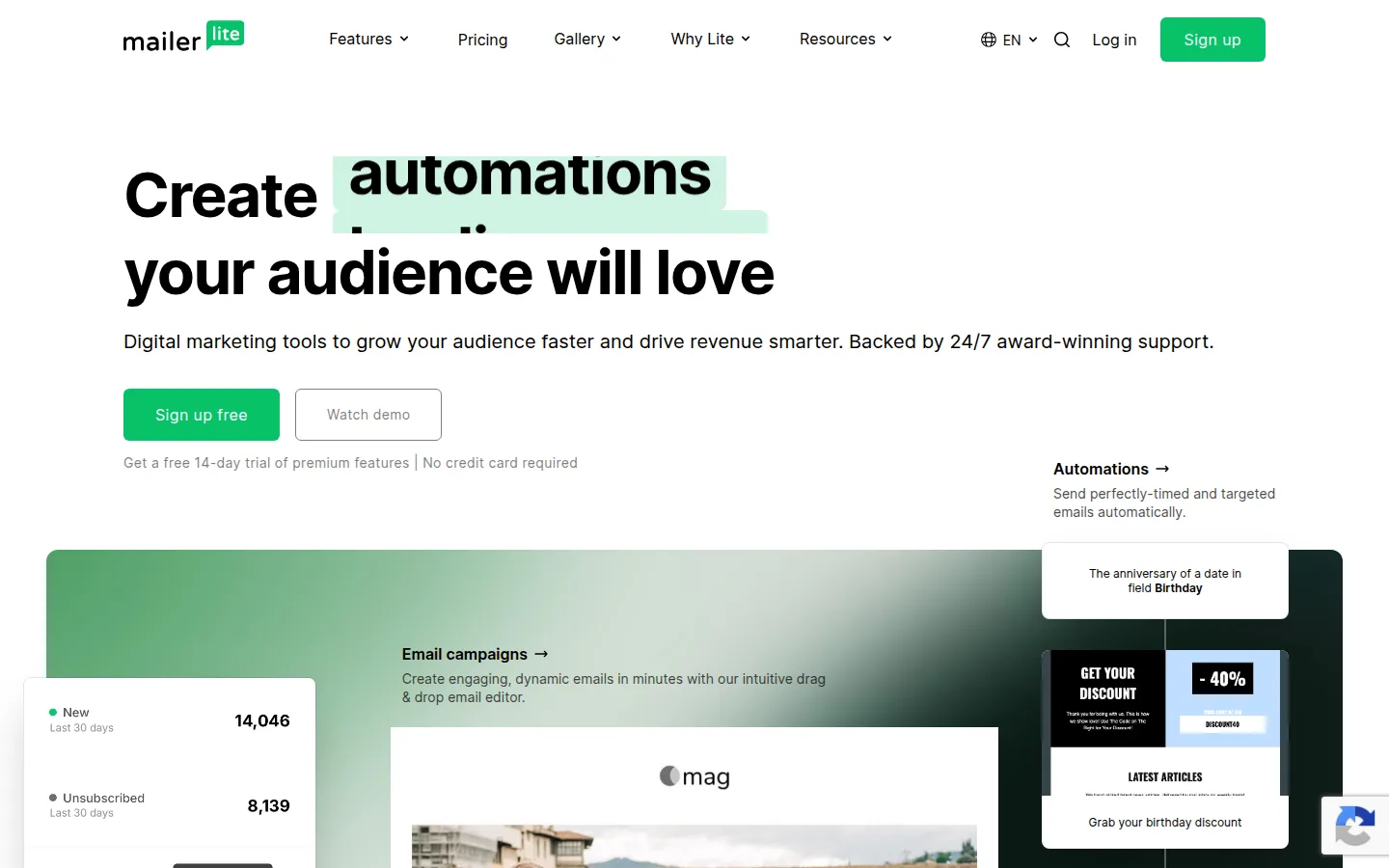
- Key features: best-in-class drag-and-drop editor, visual automations, landing pages and websites, digital product sales, A/B testing on free.
- Pricing: free plan as above with MailerLite branding. Comfort (the renamed first paid tier) is $12/month at 500 subscribers, with sends at 10× your subscriber count, 50 automations, and 10 sites; Power at $25/month removes the remaining caps.
- Pros: repeatedly the top ease-of-use scores among real email platforms (4.6/5 on G2); automation, a landing page, and a website survive on free; cheap first paid tier.
- Cons: the new 250-subscriber cap turns free into a starter pack; logo removal is paid; MailerLite's strict account-approval process rejects some legitimate signups.
- Reviews: 4.6/5 on G2 (500+ reviews on the product listing) · 2,300+ reviews on Capterra — as of July 2026.
8. Zoho Campaigns — cheapest real upgrade path
Zoho Campaigns gives you 2,000 contacts, 6,000 emails a month, and five user seats free — the most seats of any free plan here. The catch: automation workflows sit on the paid tiers, and the interface trails the modern editors.
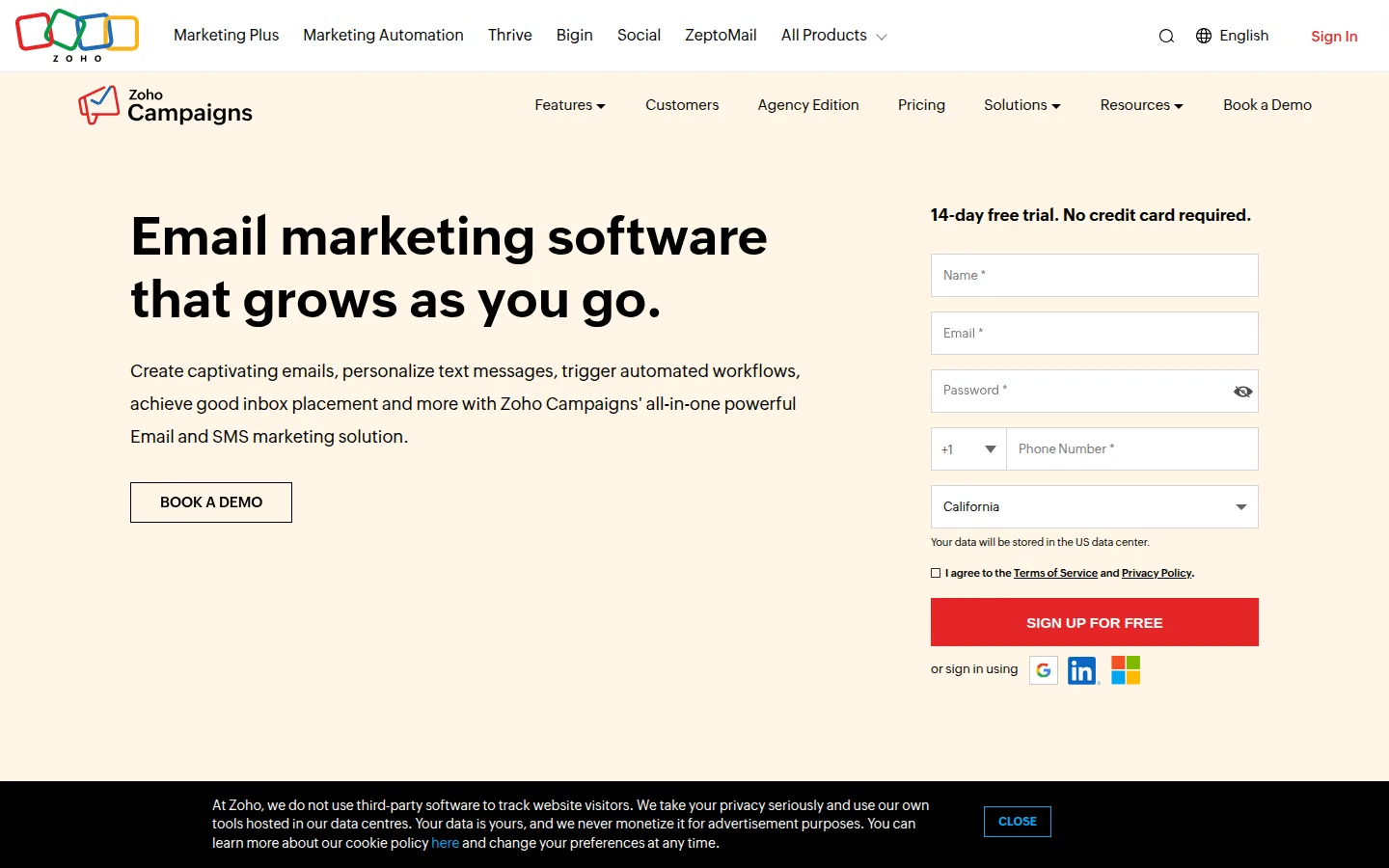
- Key features: campaign editor and templates, signup forms, contact management, tight Zoho CRM integration, workflow automation on paid plans, unlimited emails on all paid plans.
- Pricing: free plan as above. Standard starts around $3.50/month billed annually at 500 contacts per current third-party pricing checks (Zoho localizes prices behind a calculator — verify at checkout); either way it's the cheapest paid email plan in this roundup, with unlimited sends.
- Pros: five free seats; the least painful upgrade economics here; the obvious pick if you already run Zoho CRM or Books.
- Cons: no automation workflows on free; a dated interface by 2026 standards; template rendering quirks in Outlook are a recurring complaint.
- Reviews: 4.3/5 on G2 (840+ reviews) — as of July 2026.
9. Loops — the niche pick for software businesses
Loops is email for SaaS products — a deliberately minimal, Notion-like editor with marketing and transactional email in one. The free plan covers 1,000 contacts and 4,000 sends a month with every feature included, plus a small "Powered by Loops" footer.
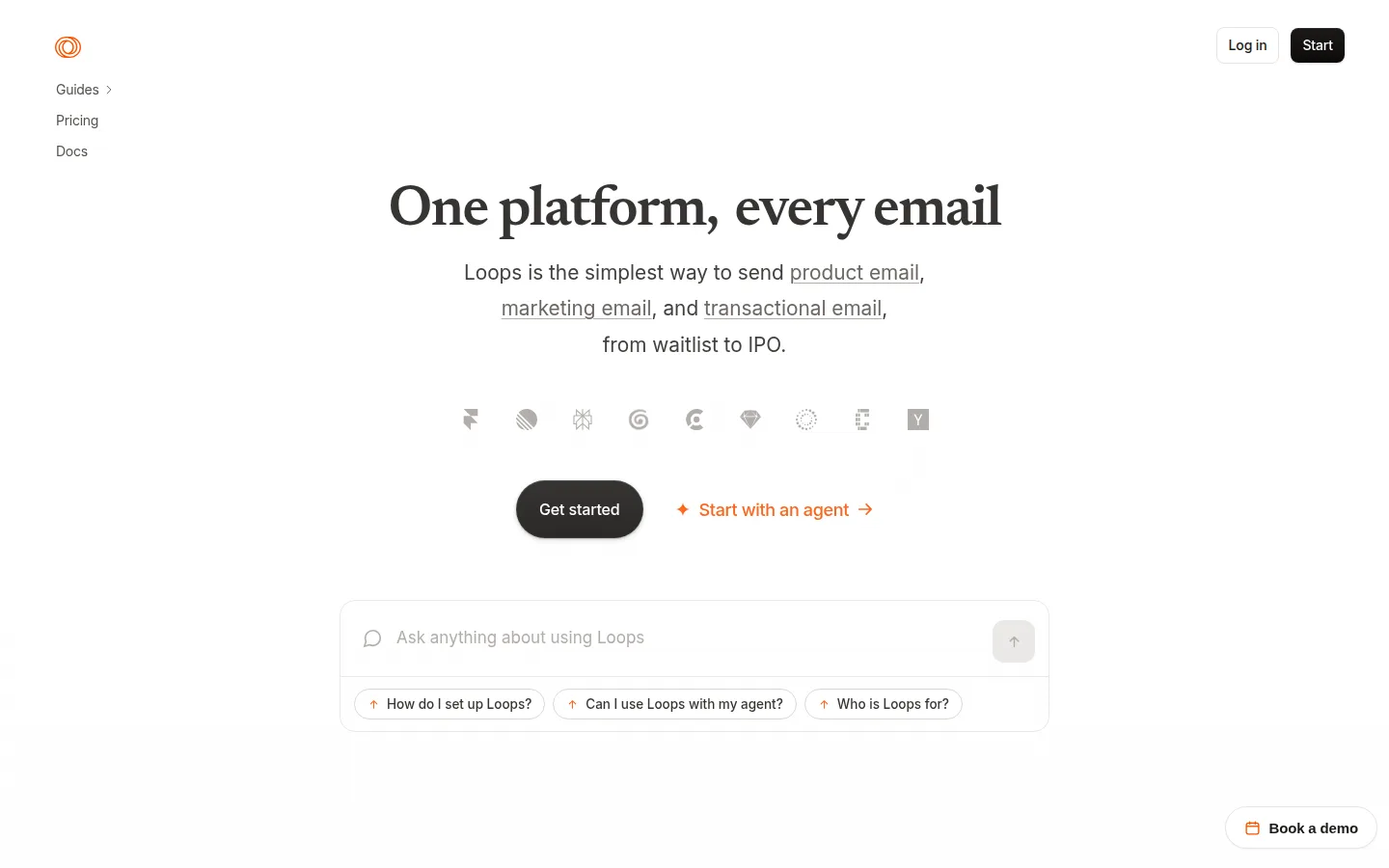
- Key features: event- and API-triggered automation ("loops"), transactional email included, property/event segmentation, SDK-first integrations (Stripe, Segment, webhooks).
- Pricing: free plan as above; paid pricing scales purely with contacts (roughly $49/month at 2,500 contacts per third-party pricing reviews — Loops shows exact numbers in a slider on its pricing page).
- Pros: zero feature-gating on free — you pay only for scale; the cleanest writing experience of the lot; transactional email without a second tool.
- Cons: built for software companies — no landing pages or cart integrations; no meaningful G2/Capterra review base yet, so it's less proven; the paid jump is steep for what's still just email.
- Reviews: no major review-platform presence as of July 2026 — we'd rather tell you that than invent a number.
10. Omnisend — best free plan for a small online store
Omnisend is ecommerce email done properly — abandoned cart, browse abandonment, and order confirmations out of the box. The free plan is small (250 contacts, 500 emails a month, 500 web pushes) but completely feature-unlocked, including full automation.
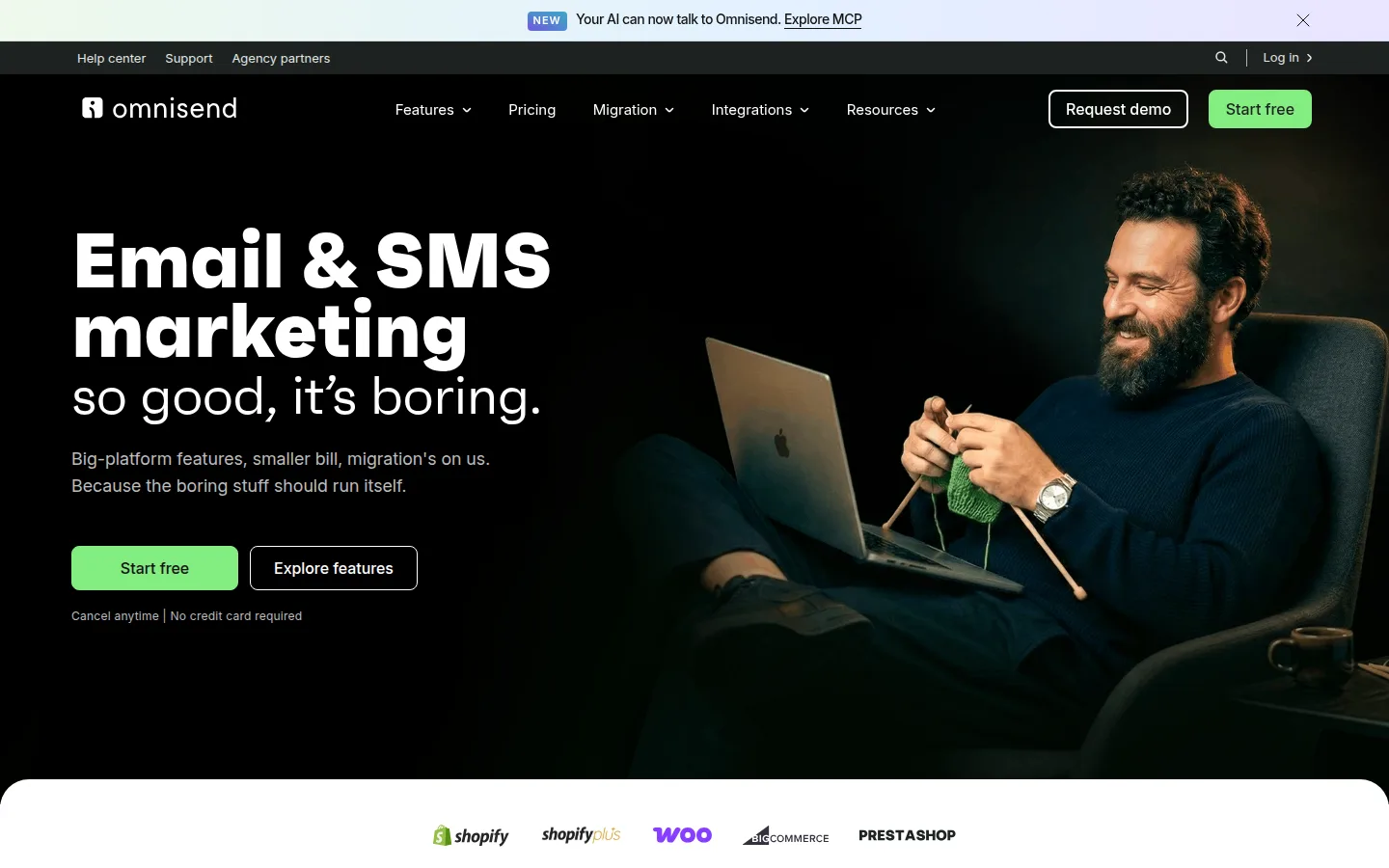
- Key features: prebuilt ecommerce workflows, deep Shopify/WooCommerce/BigCommerce/Wix integration, email + SMS + push in one workflow, behavior-based segmentation, product recommender.
- Pricing: free plan as above with a "Powered by Omnisend" badge. Standard from $16/month (500 contacts, 6,000 emails); Pro from $59/month adds unlimited emails, and since May 2026 SMS requires Pro for new accounts. Watch the frequent promo pricing — the list prices are what renew.
- Pros: the free tier is volume-limited, not feature-limited; purpose-built for small stores; 24/7 support even on free.
- Cons: 250 contacts is the joint-smallest cap here; little reason to pick it without a store; SMS moved up-tier for new signups.
- Reviews: 4.6/5 on G2 (1,180+ reviews) — as of July 2026.
11. Substack — unlimited and free, but it's a publication, not a campaign tool
Substack is the one option with no subscriber or send limits at all. Publishing is free; Substack's model is a revenue share — per its own terms, "writers keep 90% of their revenue minus credit card fees" when they turn on paid subscriptions.
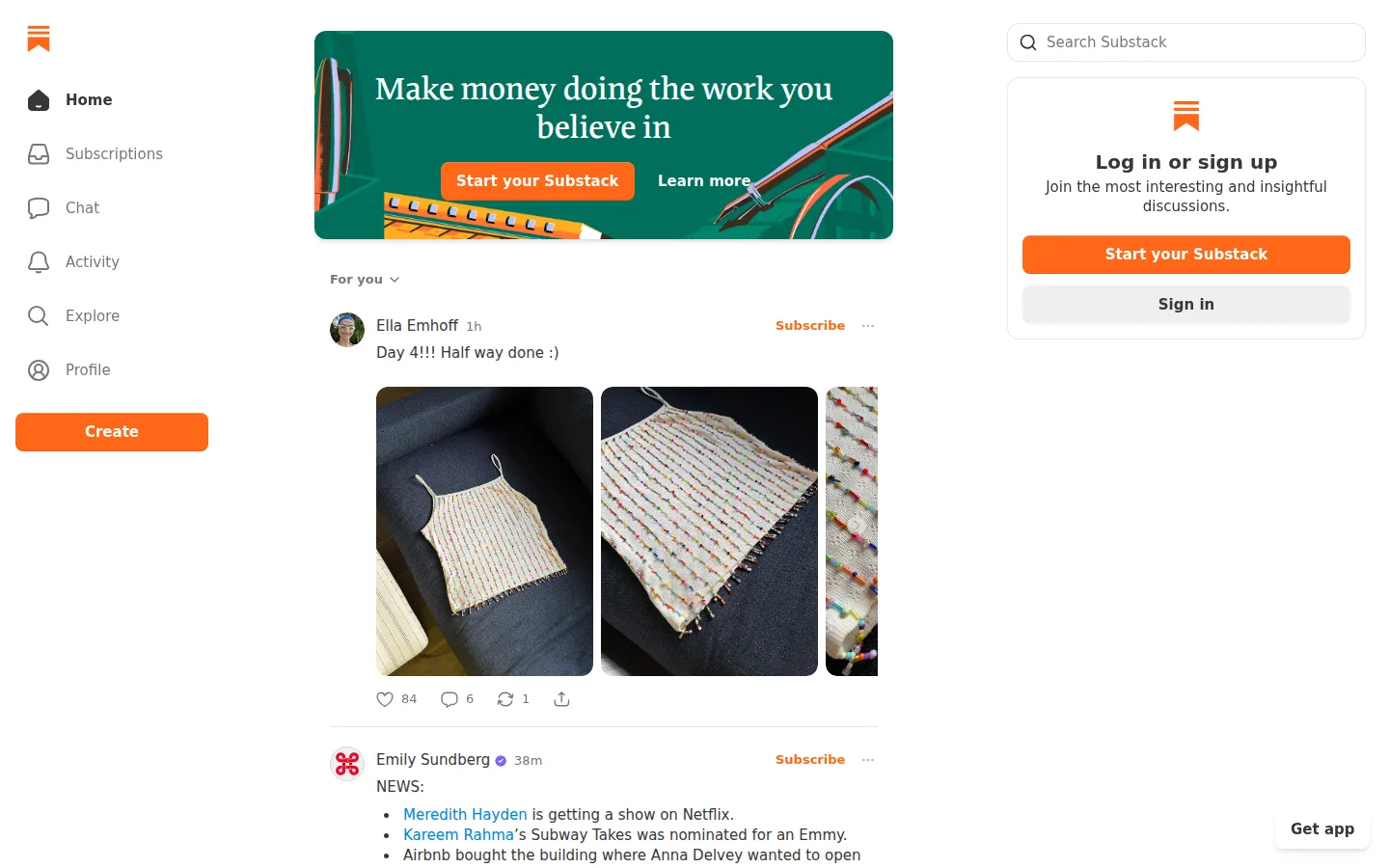
- Key features: hosted newsletter, website and archive, paid subscriptions with zero upfront cost, podcast and video hosting, the Notes/recommendations network for organic growth.
- Pricing: free with no caps; 10% of paid-subscription revenue plus card processing fees if you monetize.
- Pros: truly unlimited free sending; monetization in minutes; a built-in discovery network no email tool has.
- Cons: no automation, no segmentation, no branded templates — you cannot send a welcome series, a promo to a segment, or a cart reminder; the 10% share compounds forever once you're earning.
- Reviews: too few third-party software reviews to cite meaningfully — as of July 2026.
12. Mailchimp — the famous name, now the smallest free plan
Mailchimp built the category, and its paid product remains polished with a giant integration ecosystem. But as of February 17, 2026 the free plan is 250 contacts and 500 sends a month (250/day) with no automation and no scheduling — and Mailchimp's own policy counts "subscribed, unsubscribed, and non-subscribed contacts" toward that cap unless you archive them.
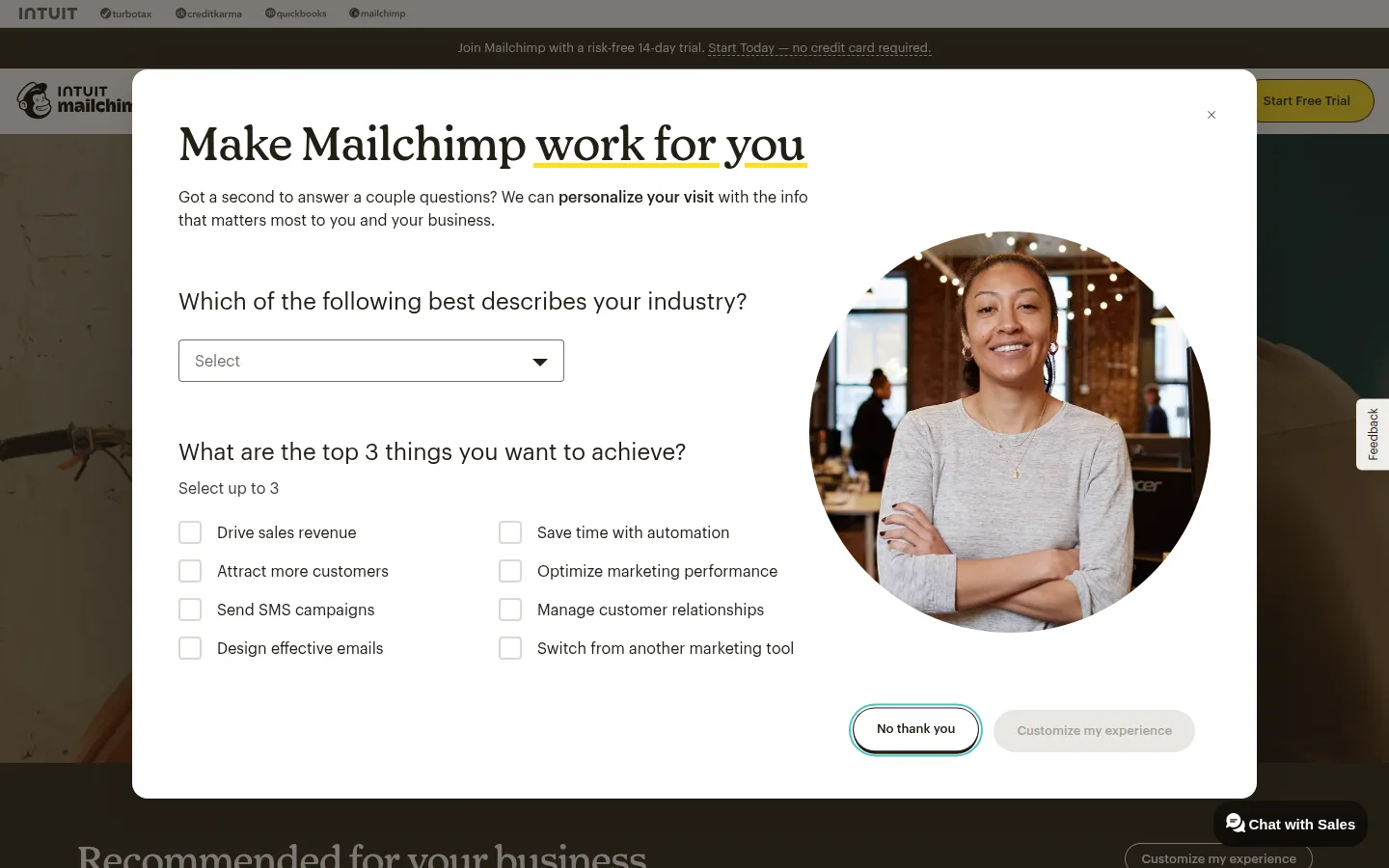
- Key features: Customer Journey Builder automations (paid), 300+ integrations, landing pages and forms on free, predictive analytics and AI content on higher tiers.
- Pricing: free plan as above. Essentials from $13/month, Standard from $20/month (both shown as 12-month intro rates — the renewal price steps up), scaling with contact count; overages on paid plans bill automatically.
- Pros: the deepest ecosystem and template library; familiar to any freelancer or agency you'll ever hire; strong reporting on paid tiers.
- Cons: the free plan no longer does a real job — no automation, no scheduling, 250 contacts; unsubscribed contacts count toward your bill unless archived; the priciest entry tier of the classic platforms.
- Reviews: 4.3/5 on G2 (12,100+ reviews) · 4.5/5 on Capterra — as of July 2026.
13. AWeber — heads-up: the free plan is gone
AWeber appears in nearly every "free email marketing" list you'll find — but as of July 2026 it no longer has a free plan. Its trial terms are explicit that the trial converts: "your paid subscription will begin automatically at the end of your trial period." We keep it here so you're not surprised at checkout.
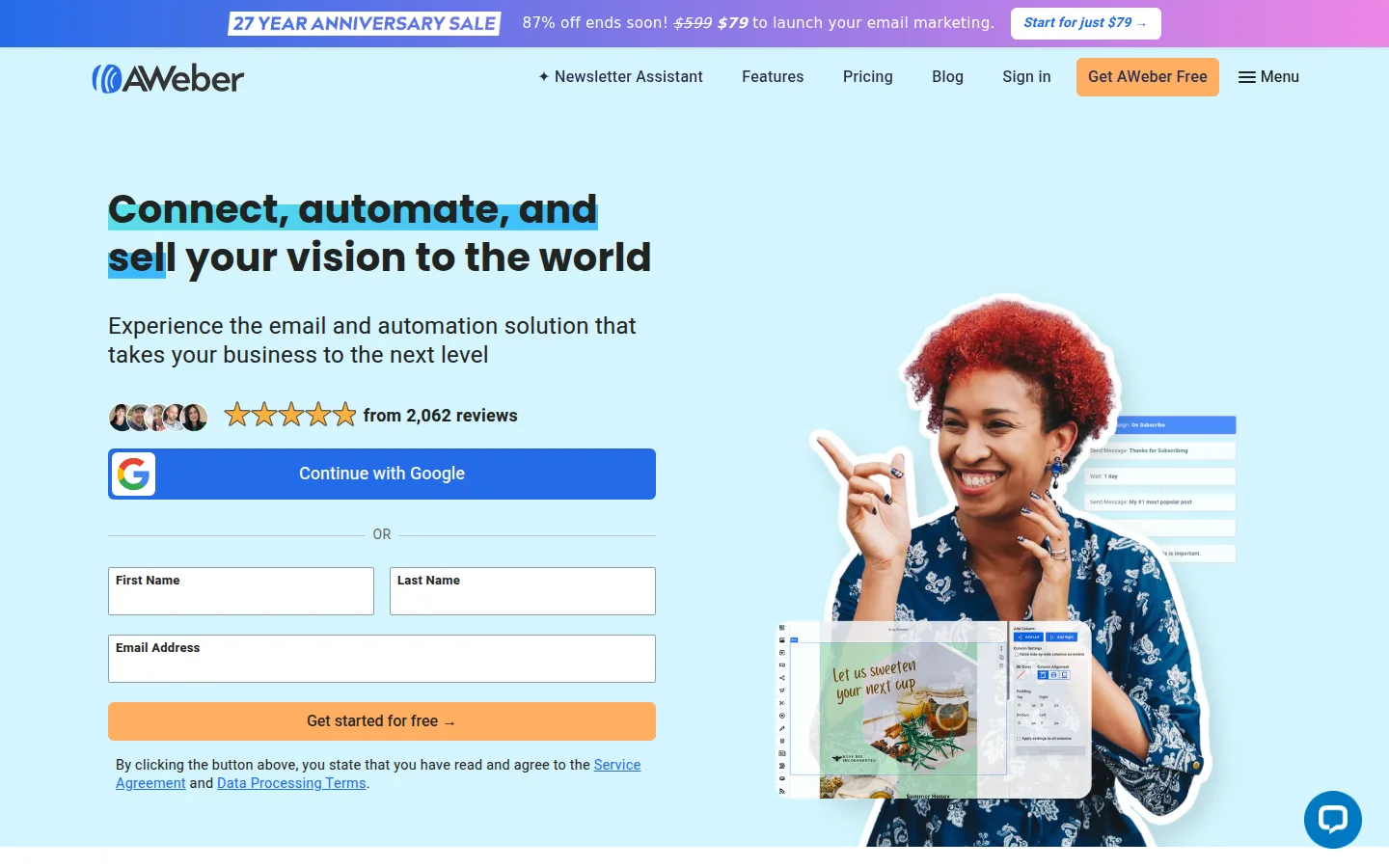
- Key features: classic autoresponders, behavioral automation on Plus, landing pages, web push, Canva integration, a very large template library.
- Pricing: Lite $12.49/month billed annually ($15 monthly); Plus $19.99/month annually ($30 monthly) with unlimited lists and automations and branding removal.
- Pros: nearly three decades of deliverability track record; simple send-limit math (10–12× subscribers); phone support tradition.
- Cons: no free plan, which disqualifies it from this list's premise; branding removal requires Plus; the lowest-rated tool in this roundup on G2.
- Reviews: 4.2/5 on G2 (645 reviews) — as of July 2026.
Which should you choose?
- The leverage answer — if email already drives revenue, just pay: Sender Standard ($7/month) or EmailOctopus Pro ($9) removes branding, caps, and automation locks for less than one lost sale; Kit Creator ($33) if you're monetizing an audience.
- You want to design a standout email and send it yourself: PosterMyWall — no subscriber cap on free because you export the finished HTML and send from your own inbox.
- You want the biggest free runway first: Kit — 10,000 subscribers before you pay a cent.
- You want automation and features free on a small list: Sender, with EmailOctopus as the simpler runner-up.
- You have a big list you email occasionally: Brevo — pay for volume, not contacts.
- You're building a newsletter as the product: beehiiv free, Substack if you want zero setup and accept the 10% share.
- You run a small online store: Omnisend — the free tier is tiny but does real ecommerce automation.
- You live in Zoho already: Zoho Campaigns.
- You run a SaaS product: Loops.
- You want maximum ease and accept a small cap: MailerLite.
One honest general note: your list will outgrow every free plan except Kit's fairly quickly if the business works. Pick the tool whose paid tier you can live with — that's the real decision.
Make every send count
The platform delivers the email; the words determine whether it gets opened. Our free, no-signup tools work with every platform above: the Email Subject Line Generator drafts and stress-tests subject lines (the single biggest open-rate lever), the AI Email Writer turns bullet points into a clean draft, and the UTM Link Builder tags your campaign links so you can see in analytics which emails actually drive sales. If you're also choosing where to keep customer records, pair your email tool with a free CRM — and the free small business tools hub lists everything else by job.
FAQs
What is the best free email marketing tool for a small business?+
By free-plan limits alone, Kit — 10,000 subscribers and unlimited sends, verified on Kit's own help pages as of July 2026. If you want full automation free on a smaller list, Sender's 2,500-subscriber plan is the strongest working toolkit. The old defaults (Mailchimp, MailerLite) now have the smallest free plans in the category.
Are free email marketing plans actually free?+
Yes, within limits — the trade-offs are vendor branding on your emails, capped subscribers and sends, and gated features like automation. The thing to check is what happens at the cap: Mailchimp places a hold on sending, and MailerLite restricts over-limit accounts from August 2026. No reputable tool here charges you silently, but AWeber's "free trial" does convert to a paid plan automatically.
What happened to Mailchimp's free plan?+
Mailchimp reduced it to 250 contacts and 500 sends per month (250/day) effective February 17, 2026, and the free plan no longer includes automation or scheduling. Mailchimp also counts unsubscribed contacts toward your limit unless you archive them, so clean your audience before assuming you fit.
Do I need SPF, DKIM, and DMARC to send marketing email?+
If you send from your own domain — yes. Google's [sender guidelines](https://support.google.com/a/answer/81126) (in force since February 2024) require SPF or DKIM for all senders to Gmail, — and SPF, DKIM, and DMARC plus one-click unsubscribe for bulk senders, with spam rates under 0.3%. Every platform in this list walks you through the DNS records; on free plans that send from shared domains, you're relying on the vendor's reputation instead of building your own.
What are the legal rules for marketing emails in the US?+
The FTC's [CAN-SPAM guide](https://www.ftc.gov/business-guidance/resources/can-spam-act-compliance-guide-business) requires accurate sender information, a subject line that isn't deceptive, your valid physical postal address in the message, a clear opt-out, and honoring opt-outs within 10 business days. Penalties run up to $53,088 per separate violating email, so the compliance footer your email tool adds isn't optional decoration.
When should I move off a free plan?+
When you hit a hard cap mid-campaign, when you need an automation the free tier doesn't allow (welcome series, cart recovery), or when vendor branding starts costing you credibility with customers. Budget-wise the jump is small at the right vendor: Sender from $7/month and EmailOctopus or Brevo from $9/month are the gentlest paths; Mailchimp from $13/month is the steepest of the classic platforms.
Final take
In 2026 the honest headline is that free email marketing got smaller — Mailchimp and MailerLite cut their plans and AWeber ended free entirely — and that's the lesson: free is the on-ramp, paid is the edge. Kit gives you the longest free runway by far, Sender gives a small list the most working features, and Brevo flips the model for big, quiet lists — but the moment your list earns, buy the tier that removes the limits; a branding-free, automated $7–$33 plan is the cheapest leverage in your marketing budget. Then spend the attention on writing better emails — our free Email Subject Line Generator and AI Email Writer are built for exactly that.
Free tools to try
Keep reading
Guide
14 Best Social Media Scheduling Tools for Small Business (2026)
14 social media schedulers ranked for small businesses — real 2026 pricing, free-plan caps, and X support for PosterMyWall, Buffer, Statusbrew, Metricool and more.
Guide
Best Free CRM for Small Business (2026)
12 free CRMs ranked by real limits — Zoho, Freshsales, HubSpot, Bitrix24 and more, with true user caps, contact caps, and upgrade costs as of July 2026.
Guide
Free Small Business Tools (No Signup): The Complete List
A directory of free small business tools — pricing calculators, invoicing, marketing, SEO, and writing. No signup, no paywall, and they explain the math.
Guide
How to Write Email Subject Lines That Get Opened
Write email subject lines that get opened: the legal rules, length and preview-text mechanics, proven angles, and what to measure besides open rate.